
Comments Re Prohibition on Use of Federal Awards for Publication Costs [200.461] and Public Communications [200.421]

This is the comment I submitted in response to the OMB call for public comments on the proposed rule on federal financial assistance.
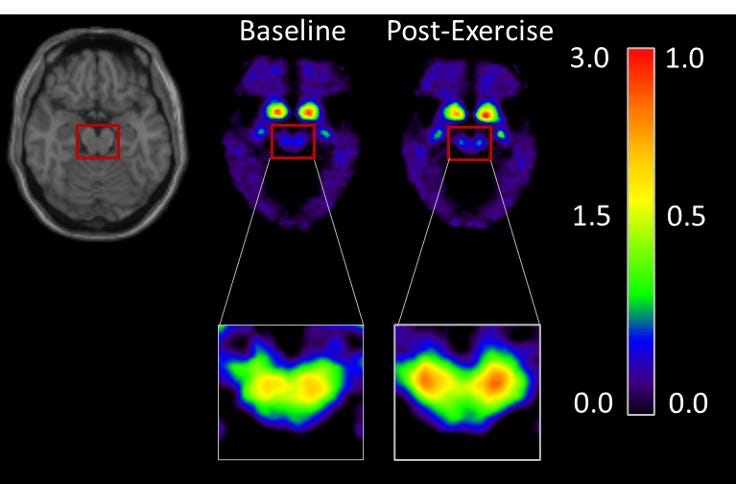
The proposed regulations make it difficult or impossible to use federal grant monies to disseminate the results of grant-funded research to both the scientific community and the wider public. And yet, dissemination of scientific results via publication and other means is exactly the point of basic research funded by the federal government. The proposed language states, “Publication costs are not inherently necessary to carry out the core programmatic objectives of most Federal awards.” This is an incorrect statement insofar as NIH and similar grants are concerned.
The proposed regulations, if enacted, will have negative consequences for both the efficiency and the ethics of science research.
I am a career biomedical scientist. I have been a professor of biomedical engineer for over 25 years. I use advanced nuclear medicine techniques (“PET imaging”) and mathematics to study alterations in brain chemistry of Parkinson’s patients and drug addicts. Knowledge of the underlying (molecular) mechanisms of these diseases brings us closer to cures.
The success of my research—and ultimately, the path to cures—depends heavily on two things: 1. A reliable and complete scientific literature of relevant experimental findings, and 2. A willingness of human volunteers to participate as experimental subjects in the research.
Re item 1, the new proposal states (under 200.421), “all advertising and public relations costs are unallowable with limited exceptions.” But no exceptions are mentioned in the proposal regarding the recruitment of patients or subjects, whereas in the current version of (200.421) there is an explicit exception to allow for recruitment, “Program outreach (for example, recruiting project participants) […] to meet the Federal award requirements.” The regulations as currently written are necessary and proper.
Re item 2. the new proposal states (under 200.461), “publication costs [are] unallowable unless such costs are expressly required by statute or approved in advance by the Federal agency on a case-by-case basis.” But (a) we cannot always anticipate the nature of our findings, so practically, that would preclude obtaining approval “in advance”. And (b), the prospect of obtaining case-by-case approval to publish and disseminate findings seems unjustifiably bureaucratic and burdensome.
If other scientists are prevented from, or even simply retarded in their efforts to publish scientific results in readily available journals, then I or other scientists may be unaware of their work. This could lead us to re-perform the very same experiments that have already been tried and proved unsuccessful. Repetition of said experiments would be needlessly wasteful of my time and the taxpayer’s money.
To find the appropriate volunteers for a given study, it is sometimes necessary to do targeted outreach to certain patient communities. Without allowable outreach (aka., “advertising” and “public relations”) it may be impossible to recruit the needed participants.
The most egregious sin, however, would be committed in violation of the trust that is established between me (as the experimenter) and my human subjects, who bravely and generously assume some measure of risk to participate in my experiments. They do so with the express hope that they will contribute to scientific and medical knowledge about their dreaded disease or condition. I know from personal experience that volunteers and others (e.g., in the Parkinson’s community) are grateful and satisfied when they read of my scientific findings in journals. The public is most likely to see scientific findings in “open access” journals. Sadly, the fees to pay for open access with federal grants is prohibited in the new proposal.
In 2024 my team published the first-ever observations of persistent changes in the brain chemistry of Parkinson’s patients following the adoption of a long-term exercise program (de Laat et al, 2024). The volunteers see these results and know that their volunteerism has resulted in the advancement of medical knowledge. Others laboring under similar difficulties are encouraged that progress is being made on their disease. I am certain that no one will volunteer if they suspect that the results will be sequestered and not published. It is a moral imperative for basic scientists to publish their results widely and in a timely manner in order to fulfill their obligations to the patients who volunteered, the scientific community who will build on the results, and the taxpayers who funded them.
References
de Laat B, Hoye J, Stanley G, Hespeler M, Ligi J, Mohan V, Wooten DW, Zhang X, Nguyen TD, Key J, Colonna G, Huang Y, Nabulsi N, Patel A, Matuskey D, Morris ED, Tinaz S. Intense exercise increases dopamine transporter and neuromelanin concentrations in the substantia nigra in Parkinson’s disease. NPJ Parkinsons Dis. 2024 Feb 9; 10(1):34.
 | A guest post by
|
To me the most jarring problem with this part of the OMB proposal is that is inconsistent with the current requirements of the funding agencies to upload all published papers in a public database where anyone around the world can read them for free. And the PIs are also required to convert the pdfs to the ADA-compliant form, so all disabled people in the world can access these papers for free. What OMB should have done is to instruct funding agencies to lift these requirements, abolish the database, and drop open-source/open-access mandates. The PIs should be free to pay publication costs if they wish to put their papers in open-access. Or publish in the journals without publication fees. Whatever the PIs find to be most suitable for their work.
Funds should indeed be available for publication as this is the final goal of research. However many scientific journals are predatory - costs being sometimes close to $4k dollars. I have been wondering if this rule will change this landscape, making society journal more attractive (some give free publication for the first 30 pages a year). I am wondering if there could be a win-win situation with limiting funds. For instance, setting a max allowed per paper (e.g. $1500).